Riverside Museum wins European Museum Academy Micheletti Award 2012
2012-05-07
Czas czytania 3 minuty
Riverside Museum, Glasgow has been named the most innovative museum in the fields of technology, labour and social history by the European Museum Academy. Riverside competed against museums in 12 other European countries to win the 17th annual Micheletti Award.
In their citation, the judges noted that: "The careful planning of the museum included involving visitors and volunteers at every stage of the development." The judges concluded: "The museum has put its budget and its large workforce to excellent use, it is completely publicly oriented, flexible and always on the outlook. It is making a change to a rundown neighbourhood, as well as being a showcase of past, present and future transport industries of Glasgow."
Lawrence Fitzgerald, Riverside Museum Manager said: "The judges were particularly impressed by the relationships the museum had built up with people before, during and after opening and by the range of stories told at Riverside."
Riverside Museum has already attracted more than 1.4million visitors since opening in June.
Design Zaha Hadid Architects
About
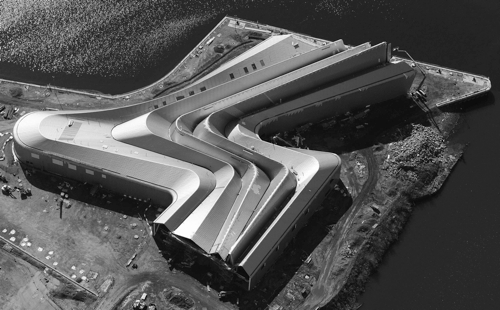
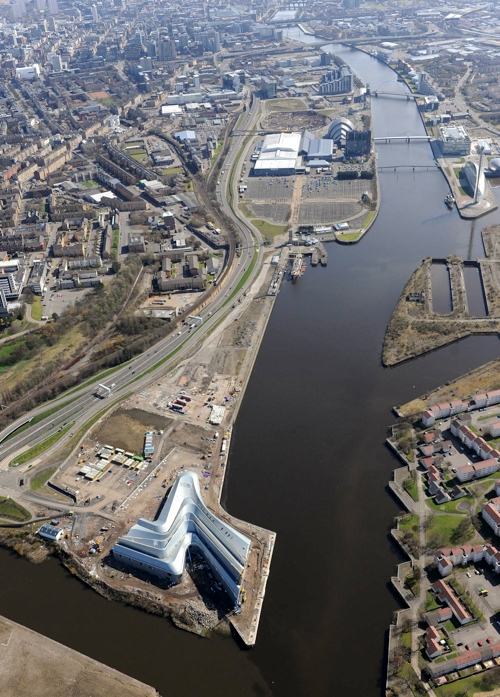
The historical development of the city of Glasgow and the ship-building, seafaring and industrial waterfront along the river Clyde, gives both a unique shared legacy. Situated where the city meets river, ‘flowing’ between the two in a symbolic representation of their dynamic relationship, the museum places itself in the very roots of its origins – establishing a clear connection between its exhibits and their wider context.
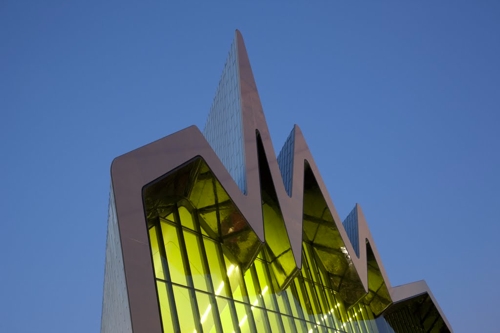
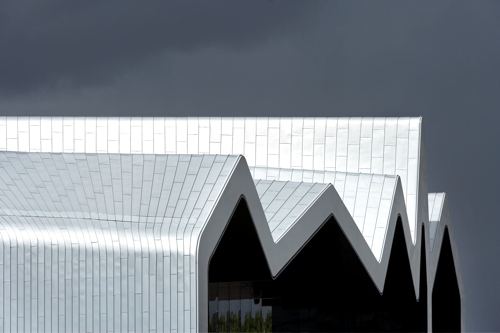
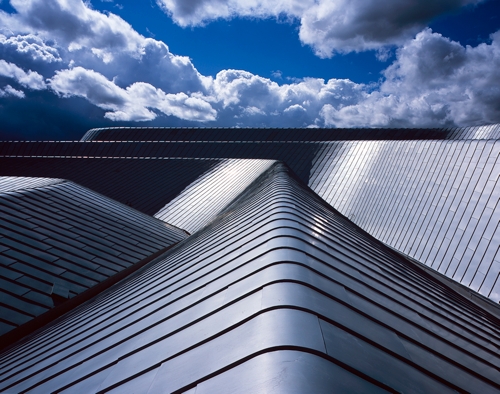
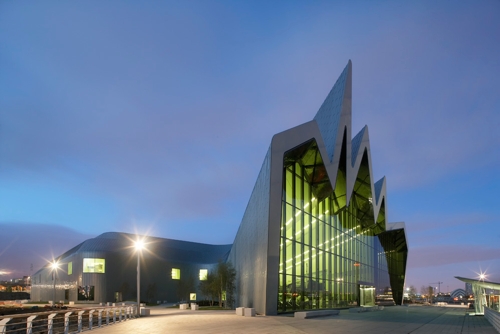
The building, conceived as a sectional extrusion open at both ends, its cross-sectional outline encapsulating a wave or pleat, faces Glasgow and the Clyde, becoming porous to its context on both sides. However, this connection is not direct, but instead diverted to create a journey into the exhibition spaces contained. In every sense, the interior path through the space becomes a mediator between city and river, which can be both hermetic or porous as required.
Circulation is through the main, open and column-free exhibition space, from which views outward allow visitors to build up a gradual sense of their external context. At the structure’s end point, the café and corporate entertainment space offers views over the confluence of the river Kelvin and the Clyde, with access to a landscaped open courtyard. Front and rear elevations are marked by their clear glass facades, both allowing expansive views over the surrounding river landscape.
Ringed stones create a shadow path around the building, moving visitors from hard surfaces to a softer landscape of grass, creating an informal space. Lined trees along the existing ferry quay reduce exposure to prevailing winds, while shallow pools along the museum’s south and east sides create a seamless continuity with the river.
Zaha Hadid Architects
www.glasgowlife.org.uk
www.zaha-hadid.com
press release